Why Your Home Office Chair Height Affects Your Daily Energy and How to Find the Right Position
Disclosure / Affiliate Notice:
As an Amazon Associate I earn from qualifying purchases. Some links in this article may be affiliate links that earn me a commission at no extra cost to you.
After spending years observing remote workers struggle with afternoon crashes and mysterious back pain, I’ve become convinced that most people are sitting wrong—and they don’t even know it. The culprit isn’t laziness or poor work habits; it’s something far more fundamental that everyone overlooks: chair height.
What strikes me as particularly frustrating is how this simple adjustment gets dismissed as trivial workplace ergonomics when it’s actually one of the most powerful tools for maintaining energy throughout the day. I’ve watched countless professionals invest in expensive standing desks, productivity apps, and energy drinks while completely ignoring the fact that their chair is slowly draining their vitality.
Why Your Body Rebels Against Poor Positioning
Here’s what most people don’t grasp: your body isn’t designed to adapt to furniture—furniture should adapt to your body. When you force yourself into an awkward seating position, you’re essentially asking your muscular and circulatory systems to work overtime just to keep you upright.
Think about it this way: if your chair sits too low, your hips sink below your knees, creating what I call the “slump trap.” Your spine curves unnaturally, compressing your internal organs and making your diaphragm work harder with every breath. It’s like trying to inflate a balloon while someone squeezes the middle—possible, but exhausting.
On the flip side, when your chair is too high, you’re essentially perching rather than sitting. Your legs dangle, creating pressure points that act like tiny tourniquets behind your knees. Blood flow gets restricted, and your cardiovascular system has to compensate by working harder. No wonder you feel tired by 2 PM.
In my experience, the ideal position—thighs parallel to the floor, feet flat on the ground—isn’t just about comfort. It’s about creating a foundation that allows every other system in your body to function efficiently.
The Energy Drain You Never See Coming

What most people overlook is the cumulative effect of micro-adjustments their body makes throughout the day. When your seating position is wrong, your nervous system constantly sends correction signals to various muscle groups. These tiny adjustments seem insignificant in the moment, but they add up to serious energy expenditure over eight hours.
I’ve noticed that people in poorly adjusted chairs exhibit what I call “fidget fatigue”—they’re constantly shifting, stretching, and repositioning without realizing why. Their bodies are literally trying to escape the constraints of bad positioning.
The respiratory component is particularly insidious. When your torso is compressed or twisted due to improper chair height, your lung capacity decreases. You might not notice you’re breathing more shallowly, but your brain certainly notices the reduced oxygen supply. The result? That familiar foggy feeling that hits right after lunch.
Reading Your Body’s Distress Signals
Here’s where I think most ergonomic advice falls short: it focuses on measurements and angles instead of teaching people to recognize their body’s feedback. Your body is constantly communicating about your seating position, but most people have learned to ignore these signals.
Pay attention to your unconscious behaviors during long work sessions. Do you find yourself crossing and uncrossing your legs repeatedly? That’s usually your body trying to restore circulation that’s been compromised by pressure points. Are you constantly arching your back or rolling your shoulders? Your spine is probably fighting against an unnatural curve created by improper chair height.
The afternoon energy crash that so many remote workers experience isn’t necessarily about blood sugar or circadian rhythms—though those factors matter too. Often, it’s the cumulative result of hours spent in a position that forces your body to work against its natural mechanics.
What I find particularly telling is when people describe feeling “heavy” or “sluggish” despite getting adequate sleep. This physical heaviness often stems from restricted circulation and increased muscle tension caused by poor seating position.
The Art of Proper Adjustment

Finding your optimal chair height requires more nuance than most online guides suggest. The standard advice—90-degree angles at knees and elbows—is a starting point, not a universal solution. Your body proportions, desk height, and even the type of work you do all influence what “optimal” means for you.
I always recommend starting with your feet flat on the floor and working upward. Your thighs should be parallel to the ground or slightly sloping downward toward your knees. If your desk is too high for this position, resist the temptation to raise your chair and let your feet dangle. Instead, invest in a footrest to maintain proper leg positioning.
Here’s something most people don’t consider: your optimal chair height might change throughout the day as your energy levels and focus requirements shift. What feels right during focused morning work might need slight adjustment during afternoon video calls or creative tasks.
The key insight I’ve gained over years of experimentation is that proper chair height should feel almost invisible. When you’re positioned correctly, you shouldn’t be constantly aware of your chair or feel compelled to adjust your position every few minutes.
Beyond Immediate Comfort
The long-term benefits of proper chair height extend far beyond avoiding afternoon fatigue. When your body doesn’t have to fight against your furniture all day, you carry less accumulated tension into your evening hours. I’ve observed that people who optimize their seating position often report better sleep quality and less overall physical stress.
What really convinces me of chair height’s importance is how quickly people notice improvements once they get it right. Within days, most people report sustained energy levels, reduced back discomfort, and improved focus during long work sessions. It’s one of those rare adjustments that provides both immediate and cumulative benefits.
The broader lesson here is that small environmental factors often have outsized impacts on our daily experience. While everyone focuses on major productivity systems and lifestyle changes, sometimes the most powerful improvements come from addressing the basic physical foundation of how we work.
Your chair height might seem like a minor detail, but it’s actually the foundation upon which your entire workday is built. Getting it right transforms your home office from a space that drains your energy into one that actively supports your well-being and productivity.
For those working long hours at a desk, having proper support for your feet can make a significant difference in maintaining optimal posture when your chair and desk heights don't perfectly align. An adjustable footrest can provide the stability needed to maintain proper positioning throughout the day. A practical example can be found here:
As an Amazon Associate I earn from qualifying purchases.
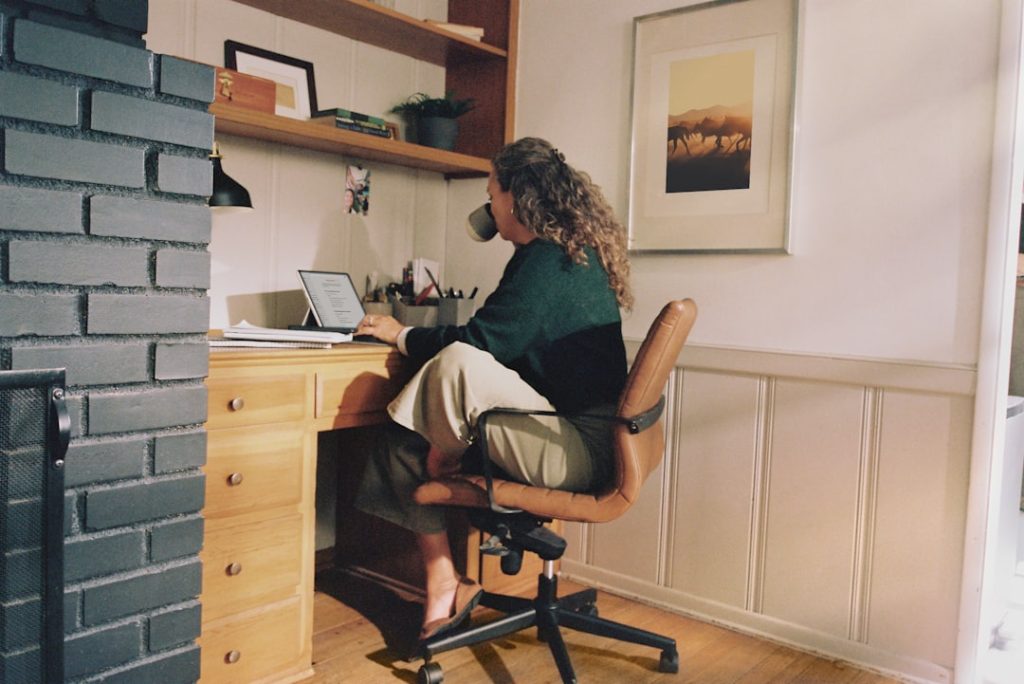
Photo by Microsoft Copilot on Unsplash